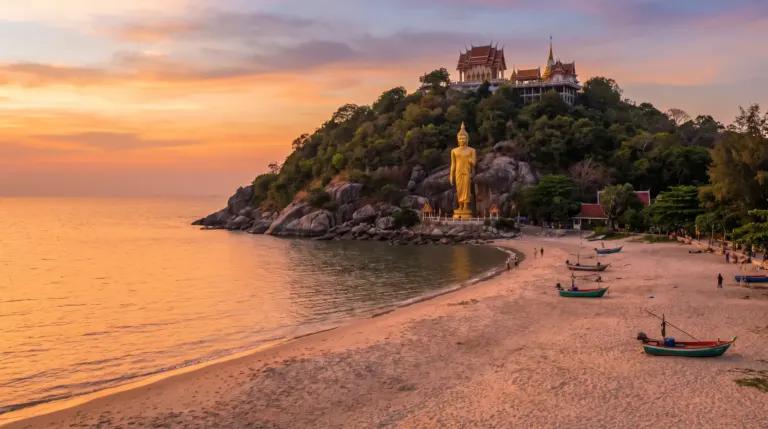
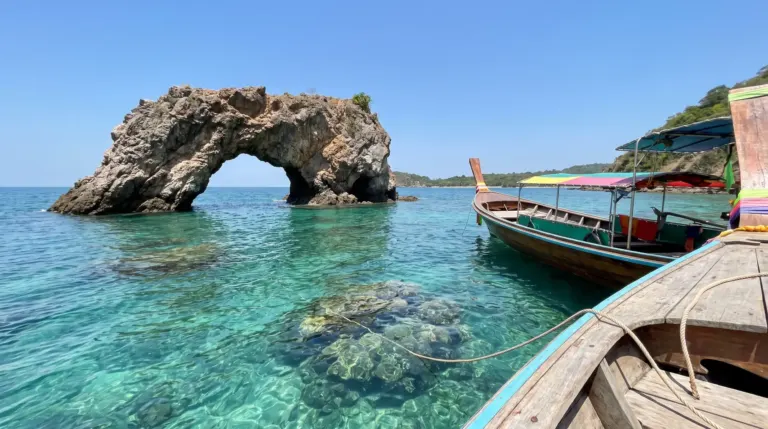
Sam Roi Yot National Park, officially Khao Sam Roi Yot or “the mountain of three hundred peaks”, is one of the most rewarding day trips from Hua Hin. Jagged limestone hills rise straight out of the sea and the marshes, hiding caves, quiet beaches and one of the most photographed sights in Thailand: the royal pavilion inside Phraya Nakhon Cave.
The park sits about 60 km south of Hua Hin, roughly an hour by car. It suits active couples, families with older children, photographers and birdwatchers, and anyone who wants nature without a long journey. Plan a full day if you can.
Getting there from Hua Hin
Sam Roi Yot National Park: Day Trip Guide from Hua Hin is about 60 km from Hua Hin — around 1 hour by car. Book a private car with a Thai driver who waits for you and brings you back whenever you are ready.
What makes Sam Roi Yot National Park special
Khao Sam Roi Yot was Thailand’s first coastal national park, established in 1966. Its landscape is a mix of karst limestone mountains, mangroves, sandy coves and a large freshwater wetland, which is why it attracts walkers, beach lovers and birdwatchers in equal measure. The wetland is recognised internationally as an important habitat for waterbirds.
The scenery changes quickly as you drive through. One minute you pass shrimp ponds and salt flats, the next you are at the foot of sheer grey cliffs. Wildlife you may spot includes long-tailed macaques, dusky langurs with their pale eye rings, monitor lizards and, in the cooler months, many migratory birds.
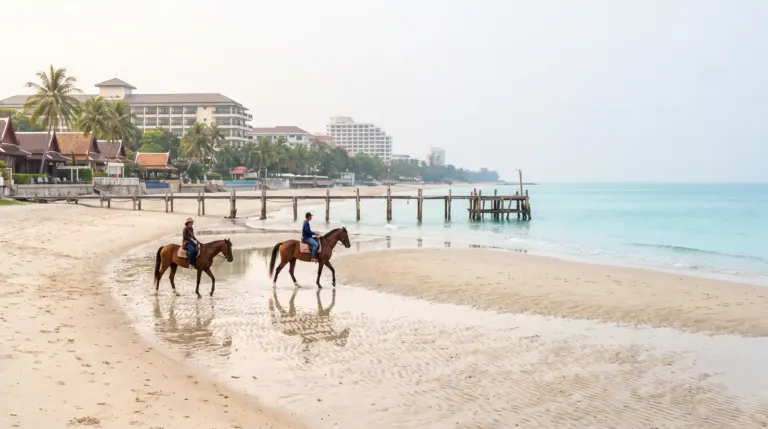
Unlike busy beaches closer to town, the park still feels spacious and calm, especially on weekdays. Facilities are simple: park offices, a few small restaurants near the beaches and basic toilets.
Top things to see in Sam Roi Yot
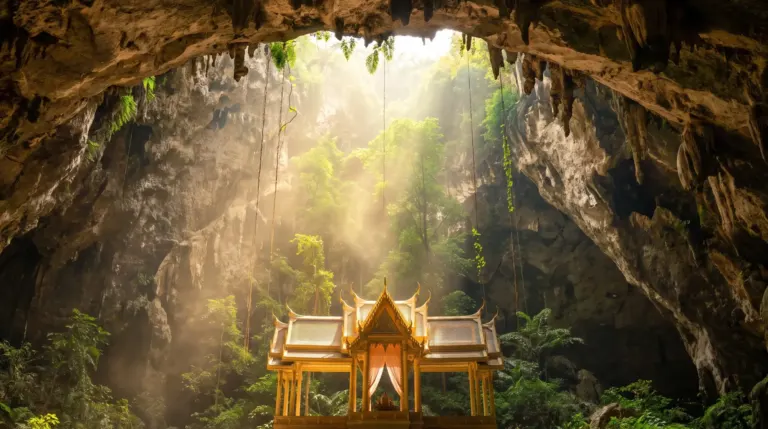
Phraya Nakhon Cave is the headline attraction. Inside a huge collapsed cavern stands Phra Thinang Khuha Kharuehat, a small Thai-style pavilion built for King Chulalongkorn (Rama V) in the 1890s. When the sun is high, light pours through the opening in the roof and frames the pavilion. Reaching it involves a boat or a walk to Laem Sala beach, then a steep, rocky uphill trail. See our separate Phraya Nakhon Cave guide for full details.
Tham Sai is another cave reached by a short but steep climb from the area near Laem Sala, with stalactites and stalagmites; it is unlit, so a torch is useful. Khao Daeng viewpoint offers a sweeping view over the peaks, river and coast after a short but steep climb, and is popular at sunrise or late afternoon.
Bueng Bua is a wooden boardwalk across part of the freshwater marsh, with lotus, reeds and birdlife. It is flat, easy and ideal for children or as a gentle end to the day. Sam Phraya beach and Laem Sala beach are good for a picnic and a paddle.
Best time to visit Sam Roi Yot National Park
The cool, dry season from roughly November to February is the most comfortable time for hiking, and it is also when migratory birds are present in the wetlands. March to May is hot, so start very early. During the rainy months trails can be slippery and boat landings at Laem Sala may be affected by waves.
Time of day matters more than season for Phraya Nakhon Cave. The famous light beams usually appear from mid-morning to around midday, so most visitors aim to be on the trail early. That also avoids the worst of the heat on the climb.
Weekdays are quieter than weekends and Thai public holidays, when Thai families visit in large numbers.
How to get to Sam Roi Yot from Hua Hin
The park lies about 60 km south of Hua Hin, around an hour by car via the main southern highway and local roads. Its sights are spread out, often 10 to 20 km apart, so having your own transport makes a big difference.
Public transport is limited. Buses and minivans run along the highway towards Pranburi, but from there you would need a local songthaew or motorbike taxi, and getting between the cave, the viewpoint and the marsh is difficult without a vehicle. Many visitors therefore hire a private car with a driver: ours picks you up anywhere in Hua Hin, drives you between the park’s spots and waits while you hike.
Self-driving is possible, but signage inside the park is mainly basic and some roads are narrow. If you join a group tour, expect a fixed schedule and less time at each stop.
How long to spend and a suggested itinerary
A full day of six to eight hours lets you see the park properly without rushing. A realistic plan: leave Hua Hin around 7 am, reach Bang Pu village or Laem Sala, climb to Phraya Nakhon Cave while the light is good, then come down for lunch at the beach.
In the afternoon, drive to Bueng Bua for an easy boardwalk stroll and finish at Khao Daeng viewpoint for late light, or visit Tham Kaew cave if it is open. You can be back in Hua Hin by early evening.
If you only have half a day, focus on Phraya Nakhon Cave and lunch, or choose the easier combination of Bueng Bua and a beach if anyone in your group is not up for steep climbs.
Combining Sam Roi Yot with nearby places
On the way south or back you pass Pranburi, with its forest park and mangrove boardwalk, and the quiet beaches of Khao Kalok and Pak Nam Pran, which have cafes and seafood restaurants.
Travellers heading further can continue to Prachuap Khiri Khan town, around 30 km beyond the park, for Ao Manao beach and the monkey hill of Khao Chong Krachok. This makes a long but very scenic full day.
What to bring and park etiquette
Wear proper shoes with grip, not flip-flops, for the cave trail. Bring water, a hat, sunscreen, insect repellent and a small torch for the darker caves. A light change of clothes is handy if you go by boat, as landings can be wet.
National park entrance fees apply, with different rates for Thai and foreign visitors; check the current fees before you go. Do not feed the monkeys, keep food in closed bags, take all litter with you and dress respectfully near the royal pavilion.
Tips before you go
- Start early: the cave trail is cooler and the light beams in Phraya Nakhon Cave are usually best from mid-morning to midday.
- Wear trainers or hiking sandals; the trail to the cave is steep and rocky.
- Carry at least one litre of water per person for the climb.
- Keep snacks hidden from macaques and never feed them.
- Bring cash for park fees, boats and small beach restaurants.
- Ask about sea conditions before taking a boat to Laem Sala, especially in the rainy season.
- Read our Phraya Nakhon Cave guide before you go.
Frequently asked questions
How far is Sam Roi Yot National Park from Hua Hin?
It is about 60 km south of Hua Hin, roughly an hour’s drive depending on traffic and which part of the park you visit first.
Is the hike to Phraya Nakhon Cave difficult?
It is short but steep and rocky, usually taking 30 to 45 minutes uphill at a steady pace. Most reasonably fit adults and older children manage it with rests and good shoes.
When can you see the light beams in Phraya Nakhon Cave?
The sun shines through the roof opening most strongly from mid-morning to around midday, and the effect depends on weather and season.
Can I visit Sam Roi Yot without a car?
It is possible but awkward, as public transport does not link the park’s spread-out sights. A private car, rental vehicle or organised tour is far more practical.
Is there an entrance fee for Sam Roi Yot?
Yes, standard Thai national park fees apply and differ for Thai and foreign visitors. Check the latest fees before your trip.
Opening hours, fees and timetables change — please check the latest information before you travel.
Need a ride?
Private car with a local Thai driver, fixed price agreed before you travel.